Since its explosive debut in October 2017, Fortnite has transcended the traditional battle royale genre to become a constantly evolving platform of live events, blockbuster collaborations, and bold gameplay innovations.
With 39 seasons across seven chapters, the game has repeatedly reinvented itself—introducing new maps, mechanics, and cultural moments that have shaped gaming history.
This comprehensive guide breaks down every Fortnite season, exploring the themes, innovations, and pivotal moments that have defined each era.
All Fortnite Seasons Explained
Understanding Fortnite’s Chapter System
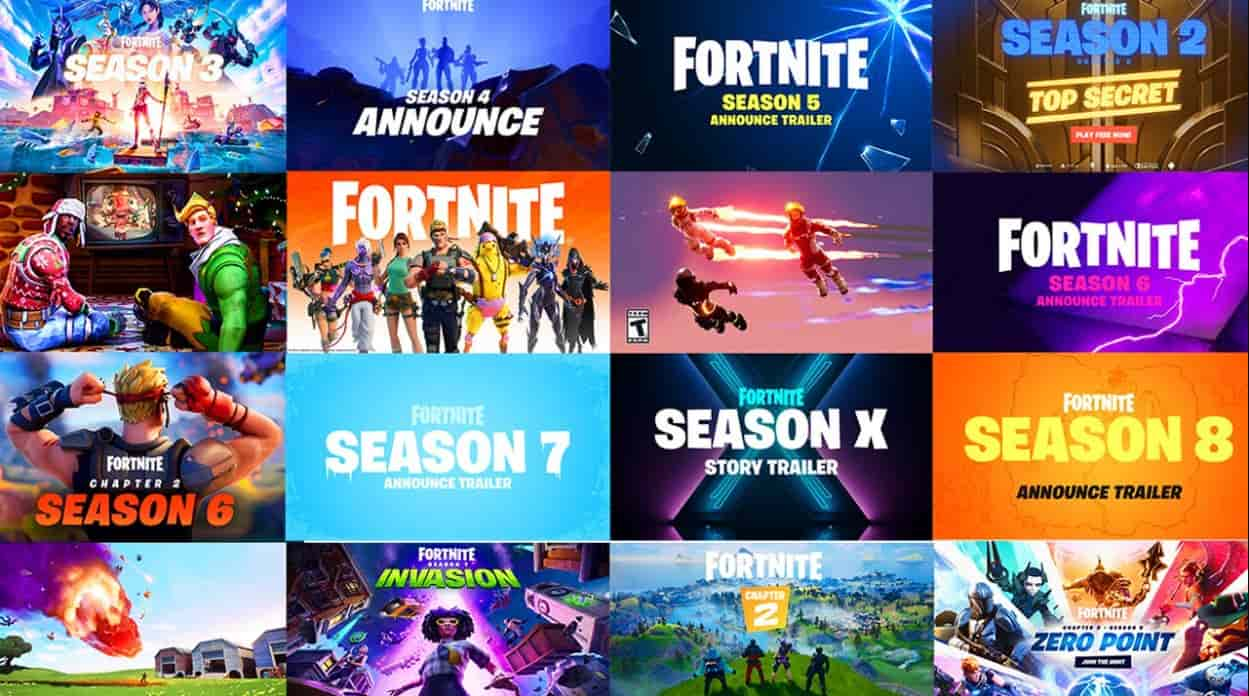
Fortnite organizes its content into Chapters, with each chapter typically containing 4 regular seasons. Starting with Chapter 3, Epic Games adopted a faster cycle, delivering new chapters every four seasons rather than the extended runs of Chapters 1 and 2.
In addition to standard seasons, Fortnite has introduced mini seasons—short, themed events lasting just 4 weeks that deliver full-scale content drops with unique maps, Battle Passes, and gameplay mechanics.
Chapter 1: The Foundation Era (2017-2019)
Season 1 – The Beginning (October – December 2017)
The season that started it all was raw and experimental. There was no Battle Pass, limited mechanics, and a map with duplicated POIs (points of interest). Many players refer to this as “Season 0” due to its unpolished nature. Despite its rough edges, the core building-shooter identity captured lightning in a bottle, launching Fortnite into the cultural stratosphere.
Season 2 – Medieval (December 2017 – February 2018)
This season introduced Fortnite’s first proper Battle Pass and established the seasonal formula that would define the game. With medieval theming, more distinct POIs, and improved weapon balancing, Season 2 marked Fortnite’s transformation from experiment to phenomenon.
Season 3 – Astronauts (February – April 2018)
The rocket launch event changed gaming forever. Season 3 debuted live events—moments where the entire player base witnessed real-time story developments. The astronaut theme and space exploration aesthetic created iconic memories that would be revisited in Fortnite OG years later.
Season 4 – Superheroes (May – July 2018)
Fortnite’s first major superhero theme introduced comic book storytelling and map destruction as core elements of seasonal transitions. A meteor strike transformed the island, establishing that the map itself could be a dynamic character in the game’s narrative.
Season 5 – Worlds Collide (July – September 2018)
A revolutionary season that added a desert biome, fundamentally reshaping map diversity. Inter-dimensional rifts created narrative continuity across seasons, introducing the concept of an evolving story that would carry through multiple updates.
Season 6 – Darkness Rises (September – December 2018)
Kevin the Cube became an unlikely star, creating real-time environmental changes that kept players checking in constantly to see what would happen next. The cube moved across the map, creating dynamic gameplay scenarios that had never been seen before in battle royale games.
Season 7 – Winter (December 2018 – February 2019)
A snow biome transformed portions of the map while the Winter Royale tournament signaled Fortnite’s serious esports ambitions. However, the season became controversial when an overpowered sword weapon disrupted competitive play, forcing Epic to learn hard lessons about game balance.
Season 8 – Pirates (February – May 2019)
Pirates invaded with cannons, a volcanic biome, and jungle regions that added verticality to gameplay. Mobility options expanded dramatically, changing how players rotated across the island.
Season 9 – The Future (May – July 2019)
This season introduced community voting, allowing players to decide which vaulted weapons would return. This interactive approach to meta development gave the community direct influence over gameplay.
Season X – Time Travel (August – October 2019)
Perhaps the most controversial season in Fortnite history. B.R.U.T.E. mechs dominated gameplay with overwhelming power, while a dancing POI forced players into choreographed routines. Yet Season X also hosted the Fortnite World Cup—Epic’s biggest esports event to date, featuring a $30 million prize pool. The chaos of Season X set the stage for Fortnite’s biggest transformation yet.
Chapter 2: The Reinvention Phase (2019-2021)
Chapter 2 Season 1 – New World (October 2019 – February 2020)
The biggest change in Fortnite history. After a black hole event, Fortnite emerged with an entirely new map, refreshed weapons, and overhauled mechanics. This 127-day season (the longest ever) proved that Fortnite could abandon everything and start fresh while retaining its player base.
With only one major content update—adding a harpoon gun—the season felt static, but players had an entirely new world to explore.
Chapter 2 Season 2 – Spies/Heists (February – June 2020)
Widely considered one of the best Fortnite seasons ever. Boss fights, mythic weapons, and elaborate vault systems made every match feel like a spy thriller. Characters like Midas became instant icons, and the gameplay loop of defeating bosses for powerful loot created a new template for seasons to follow.
Chapter 2 Season 3 – Flood (June – August 2020)
Epic took a biblical approach: they flooded the entire map. The water gradually receded over weeks, creating a progressive storytelling mechanic that would influence future seasons. The regularly scheduled map evolution resembled the roadmap structure that would later define mini seasons.
Chapter 2 Season 4 – Superheroes (August – December 2020)
The first full collaboration season featured Marvel characters, POIs, items, and storylines dominating every aspect of the game. While controversial among purists, it established that Fortnite could be completely taken over by third-party franchises—a precedent that would reshape the game’s identity.
Chapter 2 Season 5 – Zero Point (December 2020 – March 2021)
A season with promising mechanics like sand tunneling that spent most of its runtime deactivated due to bugs. Lackluster POIs and a bounty system that never quite clicked made this a transitional period, though the core gunplay remained solid.
Chapter 2 Season 6 – Primal (March – June 2021)
One of Fortnite’s most divisive seasons. Crafting systems and wildlife were added, but rather than enhancing gameplay, these mechanics bloated the game loop. Having to craft every weapon slowed matches and frustrated players. Most features from this season were quietly retired, marking it as a low point in the game’s evolution.
Chapter 2 Season 7 – Alien Invasion (June – September 2021)
Chapter 2 rebounded with UFO vehicles and innovative lobby mini-games that replaced traditional early-game looting. The alien invasion theme delivered strange but effective ideas that kept the season fresh and engaging.
Chapter 2 Season 8 – Cubes (September – December 2021)
Chapter 2 closed quietly with a season that lacked a coherent identity. Kevin the Cube returned, but the magic was gone. This forgettable season served as a transitional period while Epic prepared for major changes ahead.
Chapter 3: The Structural Revolution (2021-2022)
Chapter 3 Season 1 – Flipped (December 2021 – March 2022)
Another new map arrived, along with Spider-Man Web Slingers—perhaps the most beloved mobility item in Fortnite history. The loot pool was completely overhauled, and a unique spray meta emerged where players briefly abandoned shotguns, marking a rare shift in Fortnite’s combat meta.
Chapter 3 Season 2 – Resistance (March – June 2022)
The season that changed everything. Originally planned as a war-themed season, real-world events forced thematic changes. But the introduction of Zero Build mode became one of the most impactful changes in Fortnite history.
What started as a limited-time experiment proved so popular that Epic doubled every game mode from this point forward, offering both traditional building and Zero Build variants. This democratized Fortnite, welcoming players who had been intimidated by the building skill gap.
Chapter 3 Season 3 – Vibin (June – September 2022)
A relaxed, summer-themed season that marked a transitional period as key developers stepped away from the project. “Vibin” delivered a chill experience without major innovations, serving as a breather after Zero Build’s revolutionary impact.
Chapter 3 Season 4 – Chrome (September – December 2022)
Chrome mechanics introduced innovative but unstable features. Frequent bugs and a poorly received live event to close the season left a sour taste. Many chrome features still aren’t available in Creative mode due to ongoing technical issues, making this a uniquely troubled season.
Chapter 4: Accelerated Innovation (2022-2023)
Chapter 4 Season 1 – New World (December 2022 – March 2023)
The Unreal Engine upgrade delivered a visual overhaul and marked the beginning of faster chapter cycles. A fresh batch of weapons and a new map kept the game feeling modern, though the shortened chapter timeline gave players less time with each location.
Chapter 4 Season 2 – Neo-Tokyo (March – June 2023)
Mega City became the largest POI in Fortnite history. The Kinetic Blade added beloved mobility, and the futuristic Tokyo-inspired aesthetic created a distinct visual identity.
Chapter 4 Season 3 – Wilds (June – August 2023)
Often ranked as one of the worst Fortnite seasons, this summer update introduced a jungle biome with janky mud mechanics. The layout became a death trap for Zero Build players, creating massive imbalance.
Competitive Fortnite hit a serious snag when healing environmental items allowed teams to infinitely trade surge damage, exploiting storm mechanics and ruining tournaments. The season’s trademark Kinetic Boomerang was vaulted for most of its run due to bugs.
Chapter 4 Season 4 – Heists (August – November 2023)
Fortnite leaned into nostalgia, offering the best weapons from the game’s history in special vaults. This heist-themed season successfully capitalized on Fortnite’s rich history, setting the stage for what came next.
The OG Revolution & Mini Season Era
Fortnite OG (November – December 2023)
The most popular period in recent Fortnite history. For one month, players returned to the Chapter 1 map, experiencing those early seasons with years of accumulated skills. The player spike was massive, proving that nostalgia combined with modern polish was a winning formula.
Chapter 5: Identity Crisis (2023-2024)
Chapter 5 Season 1 – Underground (December 2023 – March 2024)
A controversial art style shift toward less cartoonish visuals divided the community. The Flowberry Fizz healing item became essential in competitive play thanks to its mobility effects, reshaping the meta.
Chapter 5 Season 2 – Greek Mythology (March – May 2024)
Greek gods dominated the theme, but the season’s biggest contribution was finally finding a third viable shotgun. The Gatekeeper broke the longtime Pump vs. Auto dichotomy, becoming a game-changer. Overpowered medallions even helped competitive players Peterbot and Pollo secure an FNCS victory.
Chapter 5 Season 3 – Wrecked (May – August 2024)
Another summer disaster. Car combat dominated to such an extent that traditional gunplay was sidelined. While vehicle customization was interesting in theory, execution fell flat. After patches improved playability, but the damage to the season’s reputation was done. Fortnite Reload launched during this season as an alternative.
Chapter 5 Season 4 – Marvel (August – November 2024)
A second full Marvel takeover with superhero abilities flooding the loot pool. A medallion that granted wall hacks created particularly controversial competitive scenarios.
Remix Mini Season (November 2024)
The second nostalgia season returned to Chapter 2 Season 2’s map, but replaced beloved characters with musical artist skins (Ice Spice, Juice WRLD, Snoop Dogg, Eminem). While all Fortnite seasons feature collaborations, this month-long advertisement felt particularly corporate.
Chapter 6: Mixed Reception (2024-2025)
Chapter 6 Season 1 – Japanese Mythology (December 2024 – February 2025)
A much better-received art style and back-to-basics approach provided a breath of fresh air. Japanese mythology theming created a strong aesthetic reset.
Chapter 6 Season 2 – Crime/Heists (February – May 2025)
The third heist iteration introduced POIs with special loot that gave certain map locations outsized influence on gameplay outcomes.
Galactic Battle Mini Season (May – June 2025)
A full Star Wars crossover that replaced all normal weapons with blasters for one month. This mini season format proved Epic could deliver complete thematic overhauls in short timeframes.
Chapter 6 Season 3 – Superheroes (June – August 2025)
Original superhero abilities blended with collaborations like Superman. Ridiculous transformation mechanics returned, creating chaotic but entertaining gameplay.
Chapter 6 Season 4 – Bug Invasion (August – November 2025)
The least popular season since Wrecked, featuring the lowest player counts since Epic made numbers public. A mid-season update removed medallions for the first time in ages, but couldn’t save the season’s reputation.
Simpsons Mini Season (November 2025)
An incredible amount of work for a mini season: an entirely unique map, Simpsons skins in the Battle Pass, and countless Easter eggs. This four-week event featured more content than some full seasons, showcasing how much Epic had invested in the mini season format.
Chapter 7: The Collaboration Era (2025-Present)
Chapter 7 Season 1 – Pacific Break (November 2025 – March 2026)
The current season features a West Coast theme—more of a location than gameplay concept. With an extended 4-month runtime and heavy collaboration focus, including a post-Winterfest transformation of a POI into Cartmanland (South Park), this season epitomizes Fortnite’s current identity as a platform for cultural crossovers.
Key Statistics & Facts
- Total Seasons: 39 (including mini seasons)
Longest Season: Chapter 2 Season 1 (127 days)
Shortest Seasons: All mini seasons (4 weeks each)
Typical Chapter Length: 4 seasons since Chapter 3
Most Transformative Update: Zero Build mode (Chapter 3 Season 2)
Biggest Esports Event: Fortnite World Cup (Season X)
Ranking the Best & Worst Seasons
S-Tier (Best)
- Chapter 2 Season 2 – Spies, Midas, boss fights, and mythic weapons created perfection
- Fortnite OG – Nostalgia executed flawlessly
- Chapter 3 Season 1 – Spider-Man mobility and fresh map
- Chapter 1 Season 8 – Pirates and perfect meta balance
A-Tier
- Simpsons Mini Season, Chapter 6 Season 1 & 2, Chapter 4 Season 4, Chapter 1 Seasons 2-7
C-Tier (Worst)
- Chapter 6 Season 4 – Bug invasion with record-low player counts
- Chapter 5 Season 3 – Car combat disaster
- Chapter 4 Season 3 – Jungle nightmare for Zero Build
- Chapter 2 Season 6 – Crafting bloat
- Season X – Mech mayhem
Fortnite’s Evolution: Key Patterns
- Map Resets Every Chapter – Fresh islands redefine gameplay identity
- Collaborations Increasing – Third-party franchises now anchor seasonal marketing
- Mini Seasons Expanding – Short events deliver full-scale content
- Zero Build Permanence – One of gaming’s most impactful accessibility changes
- Faster Cycles – Four-season chapters replaced lengthy runs
- Summer Season Curse – Summer updates consistently struggle (Seasons 3 tend to underperform)
Conclusion: A Platform in Perpetual Motion
From its experimental launch to becoming a cultural phenomenon, Fortnite has proven that constant reinvention drives longevity. Each chapter introduces bold risks—new maps, controversial mechanics, complete loot pool overhauls—that keep the game unpredictable.
Whether through the introduction of Zero Build democratizing access, nostalgic OG returns satisfying long-time players, or ambitious collaborations bringing external franchises into the Fortnite universe, Epic Games has built something unprecedented: a battle royale that functions as a live service platform, a social space, and a canvas for pop culture crossovers.
As Fortnite enters its eighth year, the patterns are clear: shorter cycles, heavier collaborations, and gameplay systems that continue redefining what a battle royale can be. The next chapters will likely amplify these trends, ensuring that Fortnite remains one of gaming’s most dynamic and unpredictable experiences.
The journey through 39 seasons reveals a game that refuses to stagnate—one that’s willing to risk everything, including its own identity, to stay relevant. That willingness to evolve is precisely why Fortnite remains at the forefront of gaming culture.
Also Read:
- What Are CS2 Skins
- Best CS2 Skins Under $10
- How to Trade Skins on Steam
- All Fortnite Anime Skins in 2026
About the Author