Players searching for Butterfly Knife access face four distinct case options with significantly different risk-reward profiles.
Understanding what cases have butterfly knives in 2026 requires comparing price points, knife finish pools, and market positioning rather than simply identifying availability.
Each Butterfly case operates at different price tiers, from budget entries under $3 to premium options exceeding $10.
These price gaps reflect finish exclusivity, historical significance, and supply dynamics. Direct case comparison reveals which options align with specific player goals.
What Cases Have Butterfly Knives in 2026?
This guide analyzes differences between Butterfly cases, explains pricing behavior, and provides comparative data to support informed case selection decisions.
What is a Butterfly Knife?
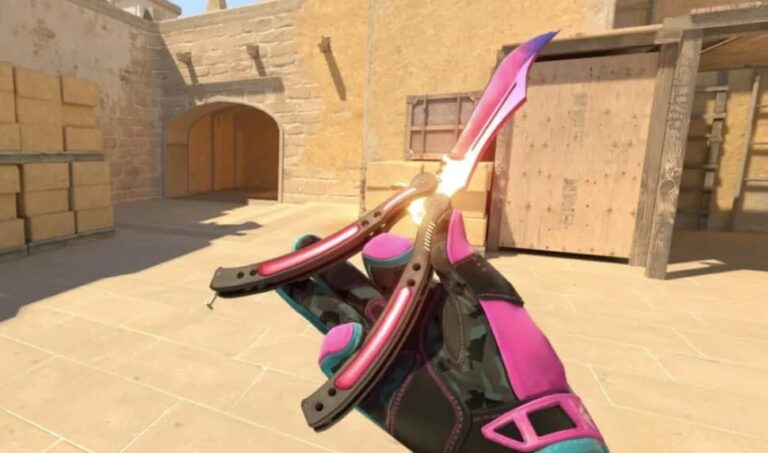
The Butterfly Knife features a balisong-style opening mechanism with smooth pivoting animations that create higher perceived gameplay value.
Unlike static knife models, the Butterfly’s deployment sequence encourages frequent weapon switching, increasing visual engagement during matches.
This animation consistency across all finishes distinguishes Butterfly Knives from other categories.
A Karambit’s animation varies minimally between Fade and Rust Coat variants, but players perceive identical animation quality across all Butterfly finishes, maintaining value stability.
Collectors treat Butterfly Knives as premium-tier assets regardless of specific finish.
Market data shows Butterfly Vanilla skins sell for 40-60% more than equivalent Bayonet Vanilla versions, demonstrating category-wide premium positioning independent of pattern complexity.
The knife’s curved blade geometry and handle design create a visual distinction that translates to sustained market demand.
This design permanence prevents the depreciation cycles affecting trend-dependent weapon skins.
What is The Price of a Butterfly Knife Case?
Butterfly cases trade at prices ranging from $2.44 to $11.00, representing a 351% variance between lowest and highest options.
This spread reflects knife finish exclusivity, case age, and non-knife weapon skin value rather than drop rate differences.
Supply age creates price stratification between cases. Operation Breakout stopped dropping in active gameplay years ago, restricting new supply entirely to market resales.
Spectrum 2 continues periodic community drops, maintaining higher circulation and lower prices despite identical knife odds.
Case price correlates imperfectly with expected value per opening. A $10 case containing Fade finishes offers different risk exposure than a $3 case with identical Doppler access.
The key distinction involves finish pool composition, not drop probability, since all cases maintain 0.28% knife rates.
| Case | Typical Price Range | Primary Value Driver |
|---|---|---|
| Operation Breakout Weapon Case | $9–$11 | Historical significance and largest finish pool |
| Spectrum Case | $5–$6 | Premium finishes including Doppler and Marble Fade |
| Spectrum 2 Case | $2–$3 | Lowest entry price with full premium finish access |
| Operation Riptide Case | $6–$8 | Exclusive Gamma Doppler and modern finish pool |
What CS2 (CS:GO) Cases Have Butterfly Knives?
Four cases contain Butterfly Knife drops, each occupying distinct market positions with different finish pools and value propositions.
Comparing cases with butterfly knives requires analyzing finish exclusivity, price stability, and competitive advantages rather than treating all options as functionally equivalent.
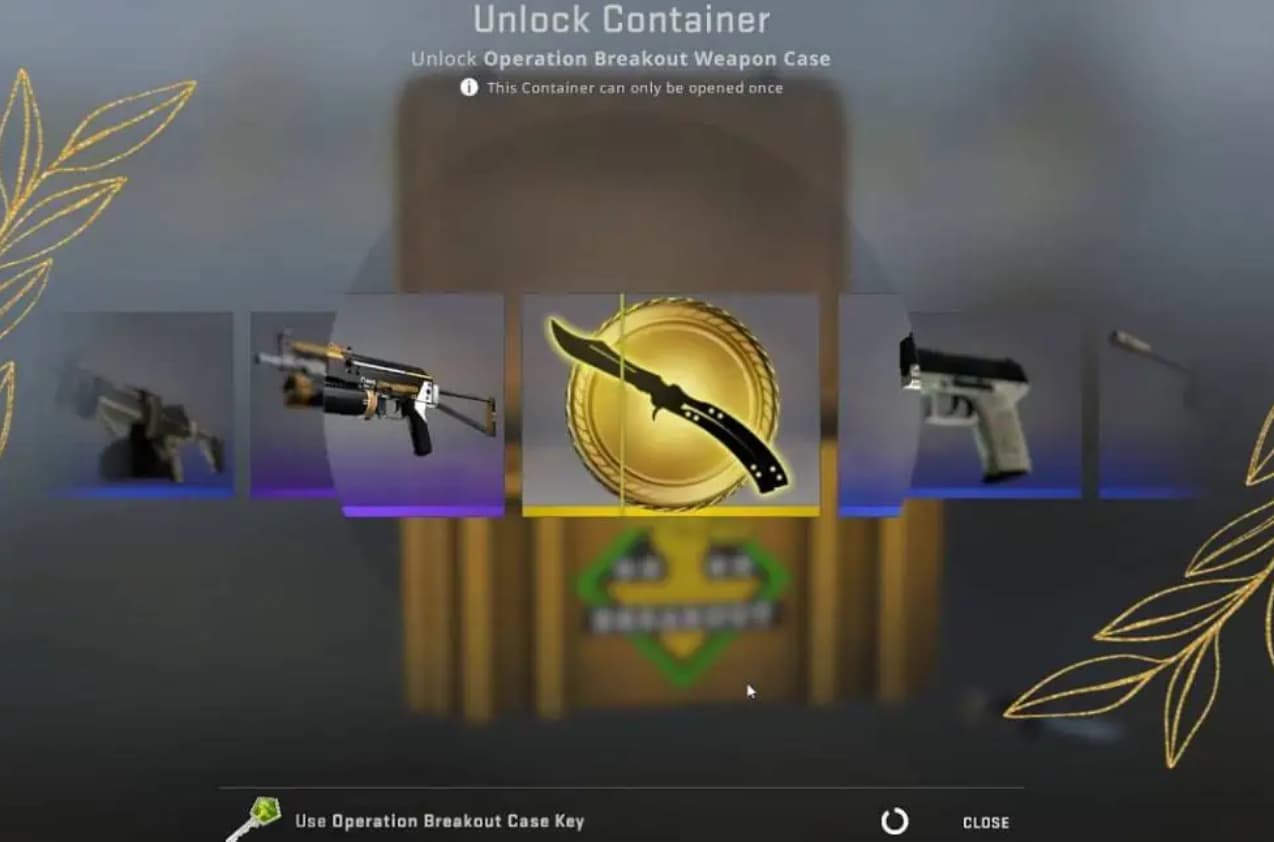
Operation Breakout Weapon Case
Operation Breakout contains the largest Butterfly finish pool at 13 variants, including exclusive access to Slaughter, Crimson Web, and Case Hardened patterns. No other Butterfly case offers these finishes, creating artificial scarcity that maintains premium case pricing.
The case’s 2014 launch date positions it as the original Butterfly source, attracting collectors who value historical significance. Despite highest per-case cost, Operation Breakout maintains consistent demand due to finish exclusivity unavailable elsewhere.
Non-knife weapon skins, including M4A1-S Cyrex and Glock-18 Water Elemental provide secondary value that partially offsets case price. This distinguishes it from cases where knife access represents the sole value driver.
| Butterfly Knife Finish | Visual Category | Market Tier |
|---|---|---|
| Fade | Gradient | High |
| Slaughter | Pattern-based | High |
| Crimson Web | Texture-based | High |
| Case Hardened | Pattern-based | Mid-High |
| Blue Steel | Metallic | Mid |
| Night / Stained / Urban Masked | Solid/Camo | Low |
Spectrum Case
Spectrum focuses exclusively on premium finishes, eliminating low-tier options like Safari Mesh or Scorched.
This concentrated finish pool creates a higher average knife value compared to Operation Breakout, despite fewer total variants.
The case contains Doppler, Marble Fade, and Tiger Tooth finishes that consistently exceed $1,000 in market value.
Damascus Steel and Ultraviolet provide mid-tier options, while only Rust Coat represents the lower value segment.
Mid-range case pricing at $5-6 positions Spectrum as a balanced option between Spectrum 2’s budget approach and Operation Breakout’s premium positioning.
Players seeking high-end finishes without maximum per-case investment favor this option.
| Butterfly Knife Finish | Visual Category | Market Tier |
|---|---|---|
| Doppler (All Phases) | Gradient | High |
| Marble Fade | Multi-color | High |
| Tiger Tooth | Striped | Mid-High |
| Damascus Steel | Texture-based | Mid |
| Ultraviolet | Solid | Mid |
| Rust Coat | Weathered | Low |
Spectrum 2 Case
Spectrum 2 duplicates its predecessor’s finish pool while trading at 50-60% lower prices due to continued supply circulation. This creates the lowest cost-per-attempt for accessing premium Doppler and Marble Fade finishes.
The case sacrifices weapon skin value for pure knife focus. Non-knife drops rarely exceed case opening costs, making Spectrum 2 strictly a knife-oriented investment. Players seeking secondary value from weapon skins perform better with alternative cases.
The lowest case price does not indicate inferior knife quality. Spectrum 2 provides identical Doppler phase access and Marble Fade patterns as Spectrum 1, demonstrating that case pricing reflects supply dynamics rather than content quality differences.
| Butterfly Knife Finish | Visual Category | Market Tier |
|---|---|---|
| Doppler (All Phases) | Gradient | High |
| Marble Fade | Multi-color | High |
| Tiger Tooth | Striped | Mid-High |
| Damascus Steel | Texture-based | Mid |
| Ultraviolet | Solid | Mid |
| Rust Coat | Weathered | Low |
Operation Riptide Case
Riptide introduces exclusive Gamma Doppler access unavailable in earlier Butterfly cases. This finish commands premium prices due to limited source availability, with Emerald phases reaching $10,000+ valuations.
The case contains only six Butterfly finishes, representing the smallest pool among what cases have butterfly knives options. However, finish exclusivity compensates for limited variety through a higher average value per variant.
Lore and Autotronic finishes provide modern aesthetic alternatives to classic patterns. This positions Riptide as the contemporary option for players preferring recent design trends over historical finishes.
| Butterfly Knife Finish | Visual Category | Market Tier |
|---|---|---|
| Gamma Doppler (All Phases) | Gradient | High |
| Lore | Pattern-based | High |
| Autotronic | Geometric | Mid-High |
| Black Laminate | Layered | Mid |
| Freehand | Artistic | Mid |
| Bright Water | Texture-based | Low-Mid |
Do I Need a Key to Open Butterfly Knife Cases?
All Butterfly cases require standard CS2 keys priced at $2.50. No specialized keys exist, but different case series use designated key types (Operation Breakout Key, Spectrum Case Key, etc.) that function identically.
Total opening costs range from $4.94 (Spectrum 2 + key) to $13.50 (Operation Breakout + key), depending on case selection.
This creates a 173% cost variance between the cheapest and most expensive opening attempts despite identical 0.28% knife drop rates.
Higher case prices compound risk exposure since multiple opening attempts accumulate costs faster.
Opening ten Spectrum 2 cases costs $49.40 total, while ten Operation Breakout attempts require $135.00, representing $85.60 additional risk for statistically identical knife odds.
Key cost remains constant across all options, meaning case price differences directly determine comparative risk levels.
Players must evaluate whether finish exclusivity justifies premium case pricing given equal drop probabilities.
Trading and Collecting Butterfly Knives
- Why Some Cases Are Better for Traders?
Operation Breakout and Riptide knives maintain higher liquidity due to finish exclusivity. Slaughter, Crimson Web, and Gamma Doppler variants face less market competition since only single-source availability exists. This creates faster sale times and more stable pricing compared to multi-source finishes.
- Case Popularity vs Knife Liquidity
High case opening volume does not guarantee knife resale demand. Spectrum 2’s low case price drives opening activity, but the resulting knife supply can temporarily depress resale values during opening surges. Understanding which cases have butterfly knives with concentrated supply helps traders avoid oversaturated markets.
- Short-Term Swings vs Long-Term Stability
Newer cases like Riptide experience higher price volatility as market consensus forms around finish valuations. Older cases like Operation Breakout show reduced volatility since the finish values stabilized years ago. Traders seeking predictable pricing favor established cases despite higher entry costs.
- Common Misjudgments in Case Comparison
Many players assume the lowest case price equals the best value, ignoring the finish pool composition. Spectrum 2 provides the cheapest access but offers no unique finishes, while Operation Breakout’s premium pricing secures exclusive pattern access. Value assessment requires evaluating finish exclusivity against cost differences rather than comparing case prices alone.
Final Verdict: Are Butterfly Knife Cases Worth It?
Case comparison research benefits players seeking optimal risk-reward positioning within predetermined budgets.
Understanding finish pool differences, supply dynamics, and pricing behaviors enables strategic case selection rather than arbitrary choices.
Cheapest case options minimize per-attempt costs but sacrifice finish exclusivity and secondary weapon skin value.
Premium cases offer unique finish access and historical significance at substantially higher risk exposure.
Neither approach proves universally superior without defining specific player objectives first.
Direct knife purchasing outperforms any case opening strategy when targeting specific finishes.
Market purchases eliminate randomness, providing guaranteed access to desired patterns at known costs.
Players asking what case has butterfly knife access should evaluate whether unboxing entertainment value justifies negative expected value versus direct acquisition.
Case selection matters only for players committed to opening despite economic inefficiency.
For these users, comparing finish pools, understanding supply dynamics, and evaluating total cost exposure creates meaningful differentiation between seemingly similar options.
Conclusion:
Four cases provide Butterfly Knife access with significant differences in pricing, finish pools, and market positioning.
Understanding what cases have butterfly knives in 2026 requires a comparative analysis of these factors rather than treating all options as functionally equivalent.
Strategic case selection depends on player priorities: finish exclusivity, budget constraints, and risk tolerance levels.
No single case proves objectively superior without first defining evaluation criteria and acceptance thresholds.
Key comparison takeaways:
- Case price differences reflect finish exclusivity and supply age, not drop rate variations that remain constant at 0.28% across all options.
- Premium cases offer unique finish access unavailable elsewhere, while budget cases provide the lowest per-attempt costs with multi-source finish pools.
- Drop probability remains identical regardless of case selection, meaning total cost exposure scales directly with per-case pricing differences.
- Comparison-informed decisions reduce misaligned expectations and support strategic case selection aligned with individual player objectives and constraints.
Also Check:
About the Author